If We Care About Learning, We Must Care About Kids’ Oral Health
Paula Izvernari | January 20, 2026
Your donation will help us produce journalism like this. Please give today.
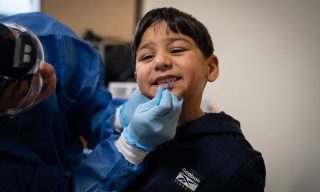
In our country, conversations about improving student performance typically focus on curriculum standards, class size, testing, teacher pay and school technology. These debates are certainly important, but they overlook a quieter factor that affects learning every single day: children’s oral health.
As a practicing dentist in Montclair, California, I regularly see children whose ability to learn is undermined by untreated dental disease. They arrive in pain, exhausted from poor sleep, unable to concentrate and often embarrassed to smile or speak. These children are not outliers. They represent a widespread and preventable problem that directly affects academic success.
The connection between oral health and school performance is well-documented. A 2019 meta-analysis found that children with one or more untreated decayed teeth were significantly more likely to have poor academic performance and higher absenteeism rates than children without dental issues. Additional studies consistently show that dental problems are linked to lower grades, difficulty completing homework and reduced psychosocial well-being.
This relationship is easy to understand. Dental pain interferes with sleep, nutrition, focus and emotional regulation. A child who spends the night awake with a toothache will struggle to pay attention the next day, if they even reach school. According to a study published in the American Journal of Public Health, children with poor oral health were nearly three times as likely to miss school as their healthy counterparts.
Moreover, a child who feels embarrassed by visible dental issues may avoid participating in class or reading aloud. All the data lead us to the same conclusion: Frequent absences for emergency dental visits cause students to fall behind academically and socially, creating a cycle that becomes harder to break over time.
Unfortunately, poor oral health disproportionately affects children from low-income families and communities with limited access to dental providers. While California’s Medi-Cal dental coverage exists, low reimbursement rates and provider shortages mean many families struggle to find timely care. In 2022, fewer than half of children enrolled in Medi-Cal received a preventive dental visit. I regularly hear the same story from these distressed parents. They called several offices before finding one that accepts Medi-Cal patients or has open appointments within weeks or even months.
As a result, minor dental issues often turn into painful infections that disrupt school attendance and learning. This is particularly concerning given that dental caries is the most chronic disease among children in the United States. When combined with socioeconomic disadvantage, limited access to care, and poor oral health becomes a serious public health issue. Across California, Hispanic children are almost twice as likely as white children to experience untreated cavities.
If decision makers are serious about improving educational outcomes, oral health must be treated as part of the educational system, not as an optional or separate medical concern. School-based dental programs can play a critical role by providing preventive services, early screenings, fluoride treatments, and sealants directly where children already are.
A great example of good practice is the Virtual Dental Home program in California. It is a demonstration project testing the delivery of health-related services and information via telecommunications technologies. Dental hygienists and assistants go to community sites such as schools, Head Start programs, day care centers and nursing homes to conduct exams and collect diagnostic information. Then the dentist uses the collected data to advise the local provider on the needed preventive and routine restorative care.
When necessary, patients are referred to dental offices for more complex needs. These lower-cost providers meet many of their patients’ oral health needs. Such programs, if funded by MediCal, would drastically reduce absenteeism and catch problems before they become emergencies.
Access also depends on policy. Policymakers must increase reimbursement rates to enable more dental providers to accept low-income patients, thereby expanding care for families who currently face long wait times or no options at all. Integrating dental screenings into existing school health services, alongside vision and hearing checks, would help ensure that oral health issues are identified early. At the same time, comprehensive oral health education that involves parents, teachers, and caregivers can reinforce prevention at home and in the classroom.
We would never expect a child with untreated vision problems to succeed without glasses or a child with hearing loss to learn without support. Expecting children to perform academically while experiencing a toothache and infection is no different.
Education begins with a child who is healthy, comfortable, and able to focus. If we truly care about learning, we must start treating children’s oral health as what it really is: a foundation for academic success, not an afterthought.
Paula Izvernari is a seasoned dentist and the owner of Montclair Double A Dental Group, a dental clinic east of Los Angeles dedicated to providing high-quality dental care for children and adults. She is an associate professor in the School of Dentistry at Loma Linda University.