California’s Success Coaches Support Academic Recovery, Relieve Teacher Workload
Magnolia Franco | March 25, 2026
Your donation will help us produce journalism like this. Please give today.
California’s schools are facing a dual challenge: closing persistent academic gaps while rebuilding an educator workforce stretched thin.
Unacceptably high numbers of students are testing below state standards, 50% in reading and more than 60% in math, according to state assessment data from the California Department of Education. Chronic absenteeism, while improving from pandemic peaks, remains well above pre-2020 levels in many districts. At the same time, school systems continue to report teacher shortages and high early-career attrition.
Federal relief funds temporarily expanded tutoring and student support programs. But those dollars have largely expired. District leaders are now tasked with advancing academic recovery while operating in a far more constrained fiscal environment.
The question facing policymakers and superintendents is not whether students need more support. It is how to provide that support sustainably, without further overburdening teachers and budgets.
One statewide model offers an effective answer: the California Student Success Coach Learning Network.
The network is a coalition of 14 AmeriCorps programs operating in more than 30 communities, from Sacramento to San Diego and Fresno to El Centro, with a presence at more than 200 schools and youth programs. The network recruits, trains and places full- and part-time student success coaches directly in K–12 public schools.
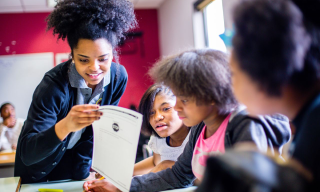
These coaches are near-peer mentors and tutors. They’re typically recent high school or college graduates between the ages of 18 and 25 exploring careers in education and youth development or simply looking for what’s next in their lives.
Applicants are recruited locally and through higher education collaborations such as California Community Colleges. They undergo screening, interviews and background checks consistent with AmeriCorps requirements. Before entering schools, they receive training in tutoring strategies, relationship-building and student engagement.
Unlike short-term volunteers, the coaches are embedded on campus to become a part of the school community, not just a periodic guest. During their time of service, typically a full school year, they provide targeted, evidence-based support aligned with school priorities directly in the classroom. That can include one-on-one and small-group tutoring,. attendance support and family communication support, academic mentoring and goal setting and social-emotional skill reinforcement.
Coaches can be directed to provide priority support to students who are identified by school staff based on academic performance, attendance patterns or other indicators.
This model is built upon a strong body of research demonstrating that high-impact tutoring and consistent mentoring relationships can improve engagement and accelerate academic gains. A landmark meta-analysis of National Bureau of Economic Research found that tutoring is one of the “most versatile and potentially transformative educational tools” for substantial learning gains across grade levels.
Of course, coaches do not replace teachers, but they vitally extend classroom capacity, augment the learning environment and allow teachers to focus on core instruction.
While AmeriCorps programs like this have existed for decades, the Student Success Coach Learning Network was created with intent to make a larger impact through the power of collaboration, information and resource sharing, and advocacy. The metrics support the efficacy of the efforts.
Across participating SSCLN programs in the 2023 and 2024 school years:
- 73% of students supported by Student Success Coaches improved their semester grades.
- 77% improved their grades over the full academic year.
- 95% of students served graduated from high school, compared with California’s statewide graduation rate of 87%.
Additionally, organizations within the network reported positive improvements in strengthening attendance efforts including reduced absenteeism and increased days attended, with two specific organizations showing an average 56% improvement in attendance-related measures.
These results are consistent with national findings. A nationally representative survey of K–12 principals conducted by the Everyone Graduates Center at Johns Hopkins University found that schools providing people-powered, evidence-based supports such as tutoring report measurable improvements in attendance and academic engagement.
For district leaders, the takeaway is straightforward: Additional trained adults embedded daily in schools help students stay on track.
Roughly 36% of student success coaches through this network pursue careers in education following their service year. A year spent working alongside teachers, students and families provides hands-on experience, professional mentorship and a bridge into teaching with a realistic view of classroom life.
This matters in a state where teacher shortages remain particularly acute in some communities.
The workforce implications extend beyond education. Research from America Succeeds, analyzing millions of job postings, found that seven of the 10 most in-demand skills are “durable skills,” including communication, teamwork, empathy and adaptability. Coaches practice these competencies daily as they collaborate with educators, communicate with families, and navigate complex student needs. In that sense, the model addresses two policy priorities simultaneously: student recovery and American workforce development overall.
Because AmeriCorps members receive a living allowance and a help paying off student loans or graduate school tuition through state and federal investment, districts can expand student support capacity with modest local contributions.
This structure offers flexibility as districts add educator capacity without committing to permanent staff positions that may be difficult to sustain during budget downturns. That can extend classroom capacity for students and strengthen a pipeline of future educators.
The impact is people helping people. Young adults are choosing to serve in support of students who might have looked a lot like them just a few short years earlier. They are supporting a teacher who may just need that extra hand and energy they gain through teamwork. And students gain access to a personal mentor whose support may just change their education trajectory.
As California looks ahead to future budget cycles and leadership transitions, the question is not whether the state can afford to invest in coordinated, people-powered student supports.
It is whether it can afford not to.
Magnolia Franco is vice president of education ecosystem and systems change at City Year and executive director of the Student Success Coach Learning Network. With more than 20 years of experience spanning classroom teaching, citywide education initiatives and strategic systems change, she is committed to building high-performing schools grounded in data-driven decision-making, instructional rigor and outcome-based accountability.