LA Parents Want Phones Out and Learning Tools In. Let’s Listen
Siobhan Dunnavant | November 11, 2026
Your donation will help us produce journalism like this. Please give today.
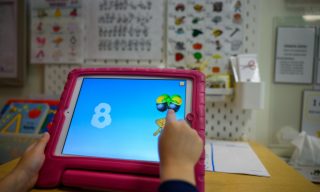
Ask a room of parents whether phones belong in class, and the conversation is short. Ask about school laptops and tablets, and it gets a lot more interesting. Most of us land somewhere in the middle, and that’s where good policy should start.
I’m a doctor, a former legislator and a mom, and I’ve learned that parents are usually the first to notice when something is off with their child. We see when a screen at home turns bedtime into a battle. We also see when a reading diagnostic program finally helps a kid who’s been struggling. Both things can be true at once.
That’s why Los Angeles deserves a closer look. In April, the LA Unified School District board voted to restrict classroom screen time and audit its education technology contracts. In June, it adopted a policy that bans classroom screens through first grade and caps daily use at 20 minutes in second and third grade. Plenty of parents pushed for change, and their worries about screens crowding out hands-on learning and friendships are real. I share some of them but also wonder whether the pendulum has swung too far.
I recently read that Impact Research surveyed 340 LAUSD parents in July and their priorities look a lot different from the headlines. Asked about the district’s top priorities, parents chose academic support (37%), teacher pay (35%), smaller classes (28%) and school safety (28%). Only 11% picked limiting screen time. On the question in front of us, 43% said schools should limit cell phones but not the computers and tablets used for learning. Just 29% wanted all screens limited.
LA parents aren’t outliers. Nationally, Pew Research found 77% of adults support banning phones during class, up from 68% in 2024. But that doesn’t mean parents want classrooms to go analog. An EdChoice and Morning Consult survey found 86% of school parents support laptops in the classroom, and in a National Parents Union survey, just 1% of the parents who favor screen limits wanted no screen time at all.
Parents are drawing a line, and it’s a sensible one. Kids scrolling social media during math class aren’t the same as a tech program that reads a passage aloud to a first-grader who is still learning to sound out words, or one that yes, uses a screen, but shows a teacher exactly which skills a child is missing. California already tackled the first problem: under the Phone-Free Schools Act, every district had to adopt a policy limiting smartphones by July 1 of this year. The harder work is deciding which learning tools earn their place.
I’m not here to hand any parent a magic number of minutes. Every child and every classroom is different, and the people closest to them, their parents and teachers, usually know best what’s working. Policy should leave room for that judgment.
The stakes are highest for families with the fewest options. Kids who don’t have a laptop at home often get their first real practice with technology at school. We shouldn’t take that away because the loudest voices in the room, however well-meaning, weren’t speaking for everyone.
We should never forget that parents know their kids best. They’ve told us what they want: phones out, learning tools in, and a seat at the table. The least school boards can do is listen.
Siobhan Dunnavant is a senior advisor to Advocates for Healthy Kids, a board-certified OB-GYN and former Virginia state senator.