Outdoor Ed Programs Canceled for Tens of Thousands of Students After Federal Cuts
Kate Rix | August 5, 2026
Your donation will help us produce journalism like this. Please give today.
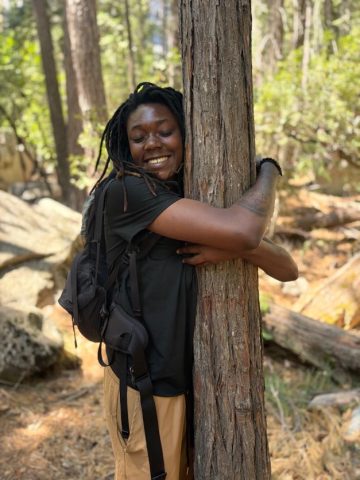
Nazma Begum spoke very little English and had never been on a hike in the woods when she moved to Detroit from Bangladesh at the age of 13.
But when she saw an announcement at her high school for a camping trip in Michigan’s Upper Peninsula, she was intrigued.
“I couldn’t help but wonder why anyone would drive nine hours just to sleep in the woods,” said Begum, who went on to co-found an outdoor adventure club at her high school. “But as I lay in my tent that night, I realized that the fresh air and peacefulness of being by the lake were unlike anything I have ever experienced.’
The trip opened up a new world of friendships and ignited a love of nature, said Begum, who will begin her sophomore year at the University of Michigan this fall.
But experiences like Begum’s are in shorter supply this summer, outdoor education advocates said, after cuts to federal grants led to the abrupt cancellation of hiking and camping trips for tens of thousands of children and teens.
“We’re worried there’s going to be a domino effect of losing a whole generation of kids who don’t have early access to nature,” said Julia Hurwit, campaign manager of the Sierra Club’s Outdoor Alliance for Kids (OAK). “We know that early access to nature is what creates lifelong advocates and environmental stewards who then grow up to lead outings like this.”
It may also be an antidote for excessive time spent in front of a phone or computer, Hurwit said. Studies show on average, kids between the ages of 8 and 18 spend more than seven hours a day watching or using screens, which can lead to sleep problems and mental health issues.
“This generation is spending the least amount of time outside of any generation in history,” she said. “We’re seeing the mental and physical impacts of that.”
Founded in 2010, OAK includes more than 100 organizations that provide outdoor experiences like Nazma Begum’s camping trip. Under past presidential administrations, OAK and its members received relatively abundant support, including President Obama’s initiative in 2015 to make it easier for kids in cities to get to trails and President Biden’s 2025 EXPLORE Act to increase outdoor access for youth and veterans.
But this summer, camping programs in Maryland, Wisconsin, Minnesota and California were canceled in the wake of funding cuts, according to Sierra Club data, scaling back summer activities for thousands of children, many of whom are from underserved communities.
In February, 2025 President Trump’s administration cut nearly $400 million in AmeriCorps grant funding, forcing the cancellation of outdoor education programs across the country. Even after some funds were restored later in the year, many programs had already been called off, including trips for nearly 24,000 students in Maryland and 3,000 youth in Wisconsin, where the Girl Scouts of the Northwestern Great Lakes shut down its Reaching Out program.
Federal workforce reductions also forced some programs to call off educational experiences. In Alaska, some Denali Discovery Camp youth trips for youth were canceled last summer after an education program manager was laid off.
In spite of the cancellations, the Sierra Club increased its goal for the number of kids that participate in outdoor education this summer and beyond. The One Million Kids Outdoors initiative, launched in June, aims to create more opportunities for students to learn outside and get more kids outside by next summer. So far more than 150 organizations have joined the initiative, helping 50,000 children connect with nature.
“We’re trying to engage our members to bring joy back into this work and grow the base,” Hurwit says, “so that if in a few years we have the chance to make moves on the policy front, we’re able to do that in a much more effective way.”
Hurwit hopes the initiative will mobilize member organizations so that it will be easier to successfully lobby for legislation that benefits outdoor education. The Revitalizing America’s Schoolyard Act, for example, was introduced in March but has not advanced during this congressional session.
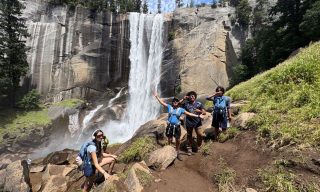
She said the Million Kids Outdoors initiative is also intended to raise the visibility of organizations that continue to lead camping, hiking, canoeing and other outdoor trips even as federal support decreases. Detroit Outdoors, a partnership between the Sierra Club and the Detroit Department of Parks and Recreation, took eight teenagers to Yosemite National Park in July for a week of climbing, photography, poetry, painting and swimming in the chilly Merced River.
Detroit Outdoors also offers overnight camping trips in Michigan to train teachers to bring their students to Scout Hollow, a campground in Detroit’s Rouge Park.
“We support the teachers so they can take their lessons outside and be able to do it where the kids are going to be safe, warm and dry and have the equipment they need,” says Garrett Dempsey, lead Sierra Club staff with Detroit Outdoors. “We really believe that time outside offers so much for a classroom environment, when it comes to learning larger academic concepts or about yourself.”
Research backs up the arguments that kids benefit from learning outdoors. Especially since COVID, outdoor education is seen in different states as a way to boost mental health and academic outcomes. Initiatives to reduce screen time and develop green spaces to cool urban “heat islands” often go hand-in-hand with efforts to get kids outside for instruction.
When federal grant money isn’t available, some organizations are able to step up their fundraising efforts. Sausalito-based NatureBridge leads overnight environmental science trips in national parks for students in grades 4 through 12. The organization raises more than $1 million annually to fund scholarships so that students who qualify for free and reduced-lunch can participate.
“Students need time away from screens, meaningful science learning and opportunities to connect with each other and the natural world,” says NatureBridge President and CEO Phillip Kilbridge. “The challenge isn’t demand, it’s that many schools are making decisions in an environment of increasing financial uncertainty.”