We Asked Students What They Needed. Then We Built Around the Answer
Chantelle Cafferata | June 30, 2026
Your donation will help us produce journalism like this. Please give today.
As educators, we spend a lot of time talking about the things we think are important. Attendance. Graduation rates. Test scores. Yes, those things matter. But before any of them improve, students have to believe that school is a place where they belong.
This year, a student told me: “I gave up on myself because school wasn’t a place for me. It wasn’t until I got to Central Coast High School that I could see myself doing more, even going to college.”
At CCHS, an alternative education school on California’s Monterey Bay Peninsula, many of our students arrive carrying more than a backpack. They carry trauma. They carry anxiety. They carry depression. Some of our students are unaccompanied minors navigating housing insecurity. Sleeping in cars. Staying in shelters. Staying with friends, or not knowing where they will sleep that night.
Too often, students facing these challenges are viewed through the lens of their behavior; not their circumstances. They are pushed out of classrooms. Suspended. Excluded. Ignored.
By the time our students arrive at CCHS, they have spent years being told what they are not. Not motivated enough. Not smart enough. Not focused enough. Rarely have students been asked about their strengths, interests or goals.
During the 2025-2026 school year, CCHS began its first year as a community school, with grant funding that allowed us to bring more services and support for students onto our campus. It gave us an opportunity to redesign our school around one question: What if we stopped asking students to fit into school and started building a school that fit our students?
Then, we designed a school around the answer.
This is what we heard. Students wanted relationships with adults. They wanted opportunities that felt relevant to their future. They wanted support when life became difficult. Their feedback led us to rethink school.
So this is what we did. First, we addressed basic needs. We partnered with Meals on Wheels to provide take-home meals and layered that support with food bank access so students and families could receive fresh produce. Nearly 2,000 meals were distributed each month.
We placed a case manager on site to help students navigate essential services, such as housing insecurity. Students cannot engage in learning when focused on survival.
We knew meeting basic needs alone would not be enough. Students also told us they needed support for their mental health. In response, we expanded access to services during the school day, including equine therapy and boxing. Both programs help students regulate emotions and manage stress. One student said: “Boxing is the one thing that quiets my brain.”
Next, we created pathways that helped students see a connection between school and life after graduation. Students explored the following pathways, including auto detailing, window tinting, HVAC, mechanics, horticulture, barbering, podcasting, eyelash technician and barista. And we developed paid internships in these fields before they graduated.
Through these programs, students connected with mentors. They continued working with students on Saturdays, helping them build their skills. Two students earned their certification through our HVAC pathway, creating opportunities for employment immediately after graduation. Other students participated in internships with Meals on Wheels, helping to prepare meals that go out to our families.
The impact was immediate. In our auto detailing pathway, 75% of students reported the class made them more likely to attend school. Similarly, in our window tinting pathway, 100% of students reported feeling more motivated to attend school and 100% reported that the class helped them feel like they belonged. When students see a connection between school and their future, engagement grows. Students who once questioned the value of school found a reason to be there.
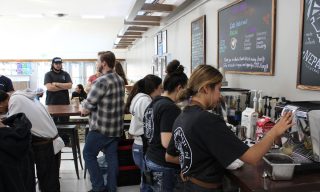
And yes, we built a coffee shop. Yes, it’s on campus.
Students helped design it, brand it and bring it to life. This is more than coffee. Students developed a business from the ground up, named it, and designed the logo.
We’ve learned that these opportunities are not separate from academics. They are often the bridge that reconnects students to school. Without that bridge, we risk losing the most powerful resource we have in society: our young people.
When students see a reason to be at school, attendance improves. Engagement grows. Confidence follows. While belonging can feel difficult to measure, our students at CCHS are telling us that something is changing.
This year, CCHS’s sense of belonging score on the YouthTruth Survey ranked in the 83rd percentile nationally. That represents a 73-point increase from last year.
Numbers alone do not tell the full story, but they help confirm what we are seeing. Students are building relationships with adults. They are participating in pathways and support services. They are beginning to see school as a place where they matter. One student said, “When you’re here, you feel like you’re someone.”
Community schools are often described as a framework built on partnerships, supports, extended learning and shared leadership. While those structures are important, I have come to see community schools as something greater.
They are a commitment to listening and responding. When students tell us what they need, our responsibility is to act. The work is never really about programs, pathways or initiatives. Those are just tools.
The real work? It’s helping students believe in themselves again. When a student who once gave up on themselves can suddenly imagine a future they never thought was possible, something bigger than a program has happened.
School becomes more than a place they attend. It becomes a place where they can become.
Chantelle Cafferata is the community school coordinator at Central Coast High School on California’s Monterey Bay Peninsula. Follow the school on Instagram at @CCHS_Community.